Metal casting is a vital manufacturing process that produces a range of products from automotive parts to industrial equipment. Casting techniques such as sand casting, investment casting, and die casting are used to create complex shapes and structures with high dimensional accuracy and surface finish. However, the process can have environmental implications that must be addressed to ensure sustainability.
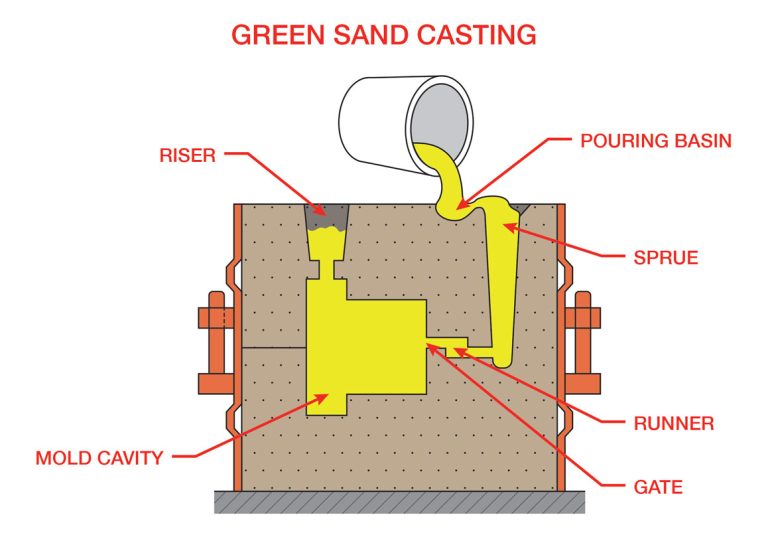
Sand casting is the most widely used casting technique due to its versatility, simplicity, and low cost. It involves pouring molten metal into a sand mold created by packing sand around a pattern. However, the process requires a significant amount of sand that must be mined, transported, and disposed of. Sand mining can cause habitat destruction, soil erosion, and air and water pollution. In addition, sand casting generates waste materials that may contain hazardous chemicals and metals.
Investment casting is a process that produces intricate and detailed parts with high dimensional accuracy. It involves creating a wax pattern of the desired part, coating it with a ceramic shell, melting out the wax, and filling the shell with molten metal. However, the process is energy-intensive and generates emissions and waste. The ceramic shell contains silica, which can cause respiratory problems if inhaled. The wax used in the process can also release harmful chemicals when burned off.

Die casting is a process that produces parts with high dimensional accuracy and surface finish. It involves forcing molten metal into a mold cavity under high pressure. The mold is made of steel and can withstand the high temperature and pressure of the molten metal. However, the process generates waste materials such as flash and scrap metal that must be disposed of properly. In addition, the process is energy-intensive and contributes to greenhouse gas emissions.
To address the environmental implications of metal casting, manufacturers must implement sustainable practices. These include reducing waste and emissions, using renewable energy sources, and recycling materials. For example, some manufacturers use sand recycling systems that reclaim and reuse sand, reducing the need for new sand and minimizing waste. Others use renewable energy sources such as solar and wind to power their operations, reducing greenhouse gas emissions.
Metal casting is an important manufacturing process that produces a range of products with high quality and precision. However, the process can have environmental implications that must be addressed to ensure sustainability. By implementing sustainable practices, manufacturers can balance quality with sustainability, reducing waste and emissions while producing high-quality products.
